Rough Terrain Vs All Terrain Crane
The right crane choice comes down to the job, the site and the stage of the project. Ground conditions, road access, lift radius, load weight, setup area and travel distance all need to be checked together. If those details are clear early, the crane can be matched to the work before the crew arrives.
On commercial projects, that planning often changes from stage to stage. A crane that suits early structural work may not be the right fit for rooftop plant, fit-out equipment or later maintenance lifts. That’s why it’s worth looking at the full project sequence, not only the first lift.
AOR Cranes can review the site conditions, load requirements and timing before recommending a suitable crane for the job. That keeps the advice focused on the work itself, without locking the project team into a crane type too early.
What Is A Rough Terrain Crane?
A rough terrain crane is designed for uneven, unsealed or difficult ground. Large tyres, high ground clearance and compact steering help the crane move around rougher work areas once it has arrived on site.
These cranes often suit jobs where the crane mainly works inside one project footprint. That can include civil construction, industrial yards, utility works, subdivisions and outer-metro sites where access roads or standing areas are still being formed.
Where Rough Terrain Cranes Fit Best
Rough terrain cranes are strongest when the work area has enough room to operate and the ground still needs a machine that can cope with changing site conditions. They’re commonly considered for:
- Gravel, compacted fill or unfinished access tracks
- Drainage, road, utility and civil works
- Industrial yards with uneven surfaces or limited fixed setup areas
- Outer-metro Sydney sites where the crane will stay within the job footprint
Rough terrain cranes are usually transported to site for public road travel, then used for movement and lifting once they’re on the job. That transport step needs to be planned into the booking, especially when access windows, escorts or delivery timing matter.
What Is An All Terrain Crane?
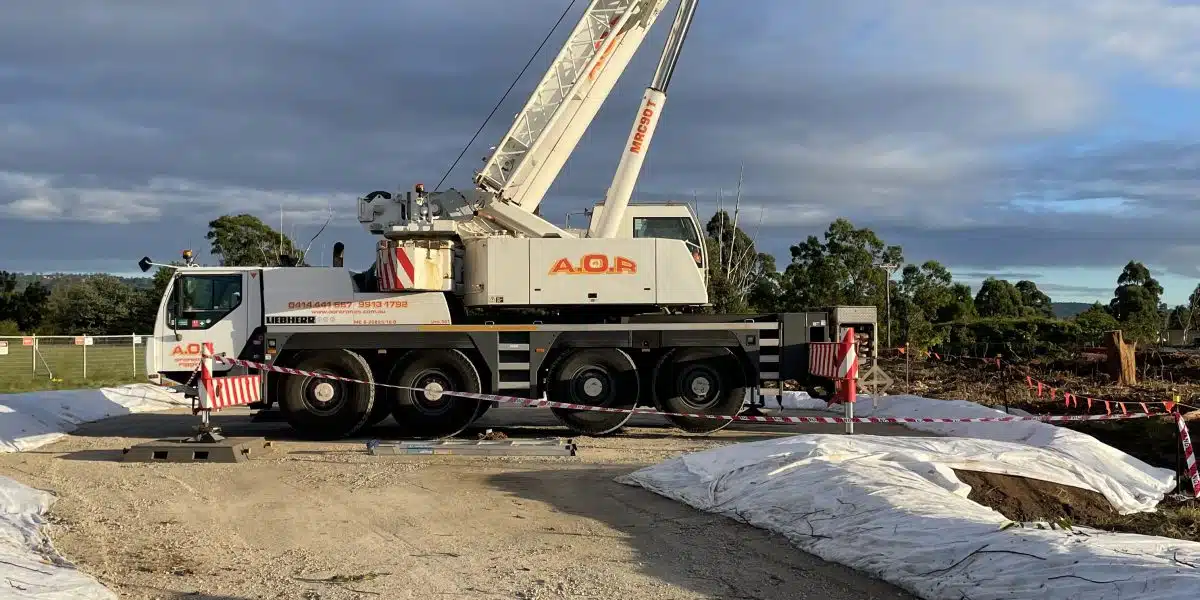
All terrain crane hire in Sydney suits jobs where road mobility, capacity and reach all matter. An all terrain crane can travel on public roads when operated within the right road requirements, then move onto varied site surfaces for lifting work.
That makes all terrain cranes useful for larger commercial lifts, infrastructure works, plant moves, structural steel, precast elements and projects where the crane may need to cover more distance before or between lifts.
AOR’s All Terrain Crane Range
AOR’s all terrain fleet includes Liebherr cranes across 40 tonne, 50 tonne, 60 tonne, 90 tonne and 100 tonne classes, giving sites options for heavier lifts, longer reach and more complex access. The current range includes:
- 40 tonne Liebherr LTM 1040-2.1
- 50 tonne Liebherr LTC 1050-3.1
- 60 tonne Liebherr LTM 1060-3.1
- 90 tonne Liebherr LTM 1090-4.1
- 100 tonne Liebherr LTM 1090-4.2
For jobs where capacity, reach and travel are all part of the pressure, an all terrain crane often gives the site team more flexibility across the full lift sequence.
Rough Terrain Vs All Terrain Crane Quick Comparison
The table below gives a practical first pass. Final crane selection still depends on load weight, lift radius, boom length, ground conditions and the setup area available on the day.
| Rough Terrain Crane | All Terrain Crane | |
| Best suited to | Uneven single-site work | Road travel, larger lifts and varied sites |
| Road travel | Usually transported to site | Can travel on public roads when set up for road use |
| Site conditions | Mud, gravel, unfinished access and uneven ground | Mixed road and job site conditions |
| Movement | Strong for moving around one site | Strong for moving between sites or work fronts |
| Capacity and reach | Depends on model and site setup | Often suited to larger lifts, longer radius and higher reach |
| Sydney use cases | Civil sites, subdivisions, utilities and industrial yards | Infrastructure, commercial construction, plant and precast lifts |
The crane name gives a useful starting point. The lift plan still needs the numbers behind it. A lighter load can call for a larger crane when the radius is long, the landing point is high or the crane can’t set up close to the work area.
Site Conditions That Shape The Crane Choice
Ground & Setup Area
Ground conditions should be checked before the crane is booked. Soft verges, wet fill, recent excavation, sloping ground and unfinished access roads can affect where the crane can stand and how the load is supported through the tyres or outriggers.
A rough terrain crane may cope well with difficult site movement, though the standing area still needs to support the lift. Outrigger mats, access track preparation and exclusion zones may all be part of the setup plan.
Load, Radius & Height
Crane choice isn’t based on load weight alone. The team also needs to know how far the load has to travel from the crane, how high it needs to go and what sits between the pick-up point and the landing area.
A small plant item lifted close to the crane can be a very different job from a lighter load that needs to reach over a roof, scaffold, trench or work zone. That’s where lift radius and boom geometry start to matter.
Access & Transport
Transport can be the deciding factor on Sydney jobs. An all terrain crane may suit a project where road travel, arrival timing and movement between work fronts are part of the lift sequence. A rough terrain crane may suit a site where transport is planned once, then the crane works inside the site for the day.
Street width, traffic control, overhead power lines, low trees, parked cars, soft shoulders and temporary access tracks can all affect the plan. Clear photos from the street, the access route and the final setup area help avoid the wrong crane turning up.
Where Each Crane Fits On Sydney Jobs
Rough Terrain Crane Hire For Civil & Outer-Metro Sites
Rough terrain crane hire often makes sense on sites where the ground is still changing. Subdivision stages, drainage works, road projects, utility upgrades and industrial yards can all involve temporary tracks, recent fill, uneven surfaces or changing access.
Outer-metro Sydney work can create these conditions quickly. A site may have space, though the access road may be unfinished, the ground may have been recently disturbed or the crane may need to work away from a sealed surface.
All Terrain Crane Hire For Commercial & Infrastructure Lifts
All terrain cranes are often used where capacity, road travel and reach need to work together. They can suit larger commercial projects, infrastructure works, plant and equipment lifts, structural steel, precast panels and jobs where the setup point sits further from the load.
They also help on projects where the crane has to travel through Sydney, arrive within a defined access window, then complete a lift that needs more reach or capacity than a smaller crane can provide.
Which Crane Should You Choose?
Use the crane type as a guide, then bring the decision back to the lift plan. AOR’s team will usually need a few practical details before recommending a crane.
- Load weight, size and material
- Pick-up point and landing point
- Lift radius, height and nearby obstructions
- Ground condition and setup area
- Access width, street layout and transport constraints
- Photos, plans or sketches that show the site clearly
Choose rough terrain crane hire when the site surface, internal access and working area are the main pressure points. Choose all terrain crane hire when road mobility, reach or higher capacity has a bigger influence on the lift. The final call should always be made against the real site details.
What To Send With Your Quote Request
For a faster project review, send through the site address, preferred lift dates, load details, access notes and any drawings or photos that show the crane setup area. If the project has several lift stages, include the likely sequence as well. That gives AOR Cranes a clearer view of the site, the load and the program before recommending a crane.
AOR Cranes Can Help Match The Crane To The Site
Crane choice is easier when the site is reviewed before the booking is locked in. AOR Cranes can assess access, ground conditions, load details, lift radius, setup space and site constraints, then recommend a crane that fits the job.
For rough terrain-style work, that may mean looking closely at access tracks, ground condition and where the crane needs to operate inside the site. For larger or more mobile lifts, it may mean matching the project with AOR’s all terrain crane hire range or another suitable option from AOR’s crane hire range.
If you’re planning a civil lift, infrastructure job, plant move or outer-metro project, contact AOR Cranes before crane day. Early planning gives the team time to review the site, choose the right crane and help the lift run cleanly from setup to pack-down.
FAQ Rough Terrain & All Terrain Crane Hire
What Is The Main Difference Between A Rough Terrain Crane And An All Terrain Crane?
A rough terrain crane is built mainly for uneven, unfinished or off-road site conditions. An all terrain crane is designed for both road travel and varied site access, which makes it useful for larger projects where the crane may need to travel across Sydney before setting up.
When Should I Choose Rough Terrain Crane Hire?
Rough terrain crane hire can suit civil sites, subdivisions, utility works, industrial yards and outer-metro projects where the crane needs to move across uneven ground within the site. It’s often a strong option when the work area is rough, muddy, sloped or still being formed.
When Is An All Terrain Crane A Better Fit?
An all terrain crane is often the better fit when the lift needs more reach, higher capacity or public road travel. It can suit commercial projects, infrastructure work, structural steel, plant lifts and jobs where the crane needs to move between locations efficiently.
Can Rough Terrain Cranes Drive On Public Roads?
Rough terrain cranes are generally designed for movement on site and are usually transported to the job. The exact transport plan depends on the crane model, access route and site conditions.
Does Crane Choice Depend Only On Load Weight?
No. Load weight is only one part of the decision. The crane team also needs to look at lift radius, height, boom length, ground support, access, obstructions and the distance between the pickup point and landing point.
What Information Should I Send Before Booking Crane Hire?
Send the site address, load weight, load dimensions, pickup and landing points, site photos, access measurements and notes about ground conditions. Clear information helps AOR Cranes recommend the right crane and plan the lift properly.
AOR Cranes is dedicated to delivering top-notch crane hire services with safety, reliability, and expertise at the core. With over 30 years of experience, we handle every project with care and expertise to meet your needs.