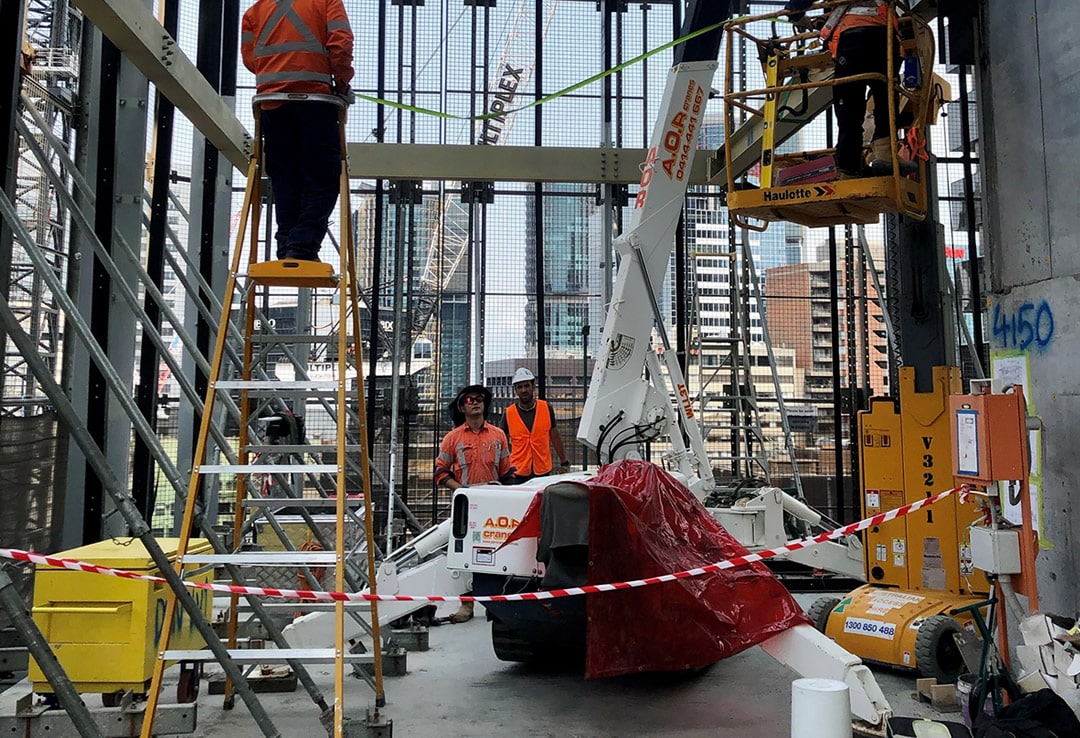
Indoor Lifts With Mini Crawler Cranes
Indoor Mini Crawler Crane Hire: Access Routes, Floor Loads And Protection For Fit-Outs
Most indoor lifts are set up for success or failure before the crane even arrives on site. A crane that suits the pick can still lose time if it can’t clear the loading dock, cross the slab safely or set up without damaging finished work. For fit-out contractors, builders and manufacturers, the pressure usually sits in the route, the floor and the timing.
Mini crawler cranes solve many of those access issues because they can work closer to the install point and move through tighter spaces than larger cranes. That strength pays off when the job is planned around real site conditions. Access, floor loading, protection and communication all need to be sorted before crane day.
Access Is Usually The First Constraint
Start With Real Measurements
Measure the full path from truck to lift zone, including the first doorway and every turn after it. Door widths, corridor turns, ramps, thresholds, floor level changes and final working space can all shape the lift. A route that looks clean on a sketch can tighten up fast once the site is active.
Treat The Route As Part Of The Lift
Fire doors, handrails, temporary partitions, stacked materials and low services often create the real pinch points. On many jobs, getting the crane into position is harder than the pick itself. Plan the unload point, travel path, work area and exit route as one sequence so the crane is not forced into rehandling or late changes.
Floor Loading Can Change The Whole Lift Plan
Consider Machine Weight
Indoor floor loading depends on more than total crane weight. Track loads while travelling, point loads at setup and the lifted item itself can all change what the slab sees. Compact cranes can still create concentrated loads in a small footprint once they are set up to work.
Check The Structure Under The Finish
A polished floor says very little about the structure below it. Suspended slabs, podium decks, mezzanines, penetrations, service pits and edge zones all need careful review.
Before mobilisation, confirm:
- crane dimensions and loading data
- lifted load weight and pick position
- slab or structural advice where required
- any load spreading needed for travel or setup
Those details can change the crane choice, the route or the lift position well before the truck is booked.
Protection Needs To Be Planned Before The Crane Arrives
Protect The Travel Path
Indoor crane work often runs through areas that are part finished or close to handover. Thresholds, tiled entries, polished concrete, resin floors and service covers need protection that suits the route and the machine. Leaving that discussion until the crane is on the truck is a reliable way to lose time.
Protect The Lift Zone
The work area needs the same care. Outrigger positions, wall corners, columns, glazing, joinery and finished surfaces near the pick or set-down point all need to be considered early. Good protection does more than prevent damage. It keeps the site cleaner, limits rework and helps the lift move without trade conflict.
Indoor Lifts Need Tighter Communication And Control
One Lift Lead Keeps The Job Moving
Indoor lifts leave less margin for mixed messages. Sightlines are tighter, routes are narrower and other trades are often working a few metres away. One person needs to lead the lift, control crane movement and call stop points so decisions stay clear when the crane is travelling or landing the load.
Keep The Calls Simple
The best communication systems are usually the simplest. Use one agreed radio channel or hand signal set, place spotters at blind corners and confirm the route and lift zone are clear before movement starts. A controlled path and a controlled work area usually save far more time than they cost.
The Right Mini Crawler Crane Depends On More Than Capacity
Access Width, Footprint And Boom Geometry Matter
A mini crawler crane can be right on the chart and wrong for the building. Machine width, overall height, turning room, outrigger spread and boom geometry all need to suit the route in and the final working area. Indoors, the crane has to fit the building before it can fit the lift.
Early Crane Input Saves Rework
This is where early input from the crane hire team pays off. A few site photos, basic measurements and a short review of the route can narrow the options quickly. That gives builders and manufacturers a better chance of matching the crane to the slab, the access path and the lift sequence before the job tightens up.
Plan Indoor Mini Crawler Lifts Early With AOR Cranes
We provide mini crawler crane hire in Sydney for projects where access is tight and the work area needs a smaller, more precise lifting solution. The current mini crawler fleet includes the 2 tonne Maeda MC285C-2, the 3 tonne Maeda MC-305C and the 4 tonne Maeda MC405CRM-5. We also support site inspections, job planning and lift documentation, which is exactly the kind of groundwork indoor lifts need.
Early planning gives our team time to review the route, confirm the crane choice and sort out floor protection, setup space and lift timing. Contact AOR Cranes online or call (02) 9024 9425 to talk through your site.
FAQ: Indoor Mini Crawler Crane Hire
Can A Mini Crawler Crane Work Inside An Existing Building?
Yes, if the route, floor conditions and setup area have been checked properly. Indoor lifts often depend on doorway width, ceiling height, turning space and slab capacity as much as crane size.
What Needs To Be Checked Before An Indoor Lift?
Start with the access path, the final lift zone and the floor structure. Builders and fit-out contractors should also look at thresholds, ramps, finished surfaces, service pits and any live work areas that could affect crane travel or setup.
Do Indoor Lifts Need Floor Protection?
In most cases, yes. Protection may include floor boards, load spreading materials, threshold protection and protection around walls, columns or finished surfaces. The exact setup depends on the crane, the slab and the route through the building.
When Should I Bring In A Mini Crawler Crane Hire Company?
Early is best. Once access, floor loading and lift sequencing are reviewed at the planning stage, it’s much easier to choose the right crane and avoid delays, rehandling or protection issues later.
AOR Cranes is dedicated to delivering top-notch crane hire services with safety, reliability, and expertise at the core. With over 30 years of experience, we handle every project with care and expertise to meet your needs.