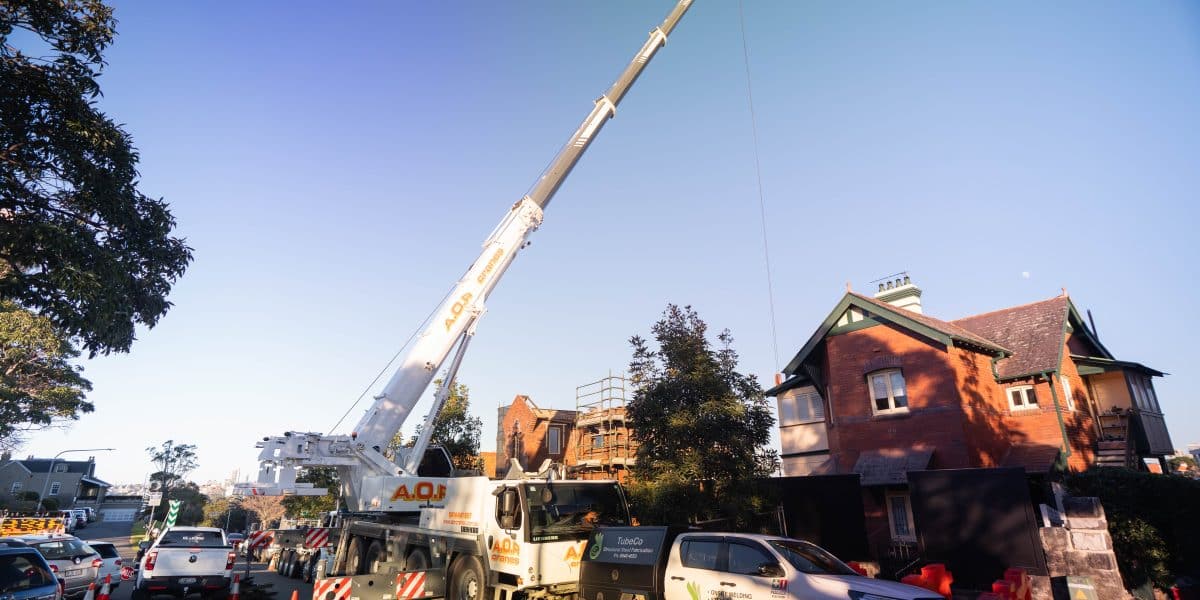
Emergency Crane Hire – Storm Readiness
Crane Storm Readiness: Emergency Crane Response For Fallen Trees, Roof Damage & Hazards
After a storm, the urgent lift is rarely the only problem on site. A fallen tree can be loaded against a roof frame, sheet metal can be hanging over a footpath, and damaged plant or building materials can be sitting one gust away from a second incident. For strata managers, councils, insurers and builders, the first decisions need to protect people, control access and stop the damage spreading.
Emergency crane hire earns its value when those first moves are handled well. Clear photos, a controlled site and accurate information help the crane provider choose the right machine, plan the access and coordinate with the other trades already involved in the make safe. That saves time, cuts re-handling and gets the site moving toward a safer position much faster.
Site Safety Comes Before The Lift
Keep People Clear Of The Hazard Area
Storm sites often contain more than one live risk. Keep residents, staff, bystanders and trades out of the drop zone around the tree, roof edge or unstable item. If there are damaged power lines, treat them as live and stay well away until the electricity authority gives an all clear. In NSW, life-threatening emergencies call for 000. NSW SES also advises calling 132 500 for storm or flood assistance when a tree blocks access, a tree threatens property, or a roof is damaged or leaking and you can’t make it safe yourself.
Stop Ad Hoc Clean-Up
Rushing into chainsaw work, roof access or manual dragging creates fresh danger. Loaded branches can spring when cut. Wet roofing can shift underfoot. Loose steel, signage and plant can move once tension changes. Hold the site, assess the hazards and make sure the lift sits inside a controlled plan rather than a rushed reaction.
Nominate One Site Lead
Someone needs to own the decisions on the ground. On one job that may be the builder. On another it may be strata, council, the insurer’s make safe contractor or a site supervisor. One clear lead makes it easier to control access, authorise the lift, brief the crane team and keep a clean record of what happened.
Access Control Decides How Fast The Crane Can Work
Secure The Work Area Early
A storm call-out can happen in a street, a car park, a shared driveway or a tight courtyard. Before the crane arrives, think about the footprint it needs to work safely. That may include pedestrian exclusion, traffic control, resident access, parked cars, neighbouring properties and a landing area for lifted material. A fast response still needs room to operate.
Check The Approach, Not Only The Lift Point
Photos of the hazard help, though street access matters as much. The crane team needs to know about lane width, overhead wires, trees, awnings, soft verges, medians and steep driveways. On strata sites, clearance under porte-cocheres or internal ramps can be the detail that changes the machine choice.
Coordinate Other Responders
Emergency lifts often sit inside a bigger response. Arborists may need to cut and rig the tree. Roofers may need temporary weatherproofing ready. Council or utility crews may need the public interface controlled before work starts. The crane usually works best when that sequence is clear before mobilisation.
Documentation Keeps The Emergency Moving
Take wide shots and close-ups as soon as it is safe. Record the tree or damaged item in context, the contact points on the structure, any blocked access, nearby vehicles and any sign of water entry or further collapse. Time-stamped photos help the crane provider plan and give insurers a cleaner record of the damage.
Have The Right Information Ready For Dispatch
When You Call, Try To Have These Details Ready
- exact address and best site contact
- what has fallen, shifted or become unstable
- whether it is on a roof, over a driveway, across a road or inside a structure
- photos from the street and from the work area
- any access limits, road control issues or power line concerns
- which other contractors are already on site
Keep A Clean Make Safe Record
For strata managers, councils and insurers, the paperwork matters almost as much as the lift. The Insurance Council of Australia describes a make safe as immediate rectification works that prevent further damage or make a site safe to visit. Record who attended, what was lifted or secured, what temporary protection was installed and what hazards remained after the crew left. That trail helps with claims, follow-on repairs and handover between contractors.
What Emergency Crane Call-Outs Usually Look Like
Triage Starts Over The Phone
Most urgent crane jobs begin with a short fact find. The crane team needs the address, photos, the nature of the hazard, what access is available and whether the site is controlled. In many cases that is enough to narrow the job to a likely crane class and flag whether traffic control, rigging gear or extra labour needs to travel with it.
The Lift Plan Still Matters In An Emergency
Storm response is fast, though it isn’t improvised. The team still needs to decide how the load will be rigged, where it will land, what can be cut before lifting and who controls the exclusion zone. On roof damage jobs, the crane lift often sits between two important tasks. Firstly removing the unstable item, and then giving roofers or builders safe access to protect the opening.
The Crane Is One Part Of The Response
A successful call-out usually involves several moving parts:
- site lead or authorised contact
- crane crew and rigging plan
- arborist, roofer, builder or make safe crew
- traffic control or public interface management where needed
- clear landing area for debris, sections or damaged plant
When those parts line up early, the crane can do its work quickly and get the site into a safer, more stable condition.
Small Details Save Time On Emergency Jobs
Send Photos From More Than One Angle
One close photo of the damage doesn’t show access. Street photos, driveway photos and any image that shows parked cars, overhead obstacles or neighbouring structures can save a second trip or a last-minute crane change.
Confirm The End Point Before The Lift
Some jobs need full removal. Others only need enough material lifted to let roofers tarp and brace the opening. Clarify what success looks like before the crane arrives, so the crew lands the load in the right place and the next trade can move straight in.
Move Early With The Best Information Available
Emergency jobs rarely begin with a full engineering file. Clear photos, a likely size or weight range and a reliable site contact are often enough to get the response moving. The detail can sharpen once the team is en route or on site.
Emergency Crane Hire In Sydney That Fits The Site
AOR Brings Planning Into Fast Response
AOR Cranes has worked across Sydney and regional NSW since 1992 and positions itself as a one stop lifting shop, with site inspections, job planning, lift studies, Job Safety Analyses, Safe Work Method Statements, traffic control and site access equipment available across its work. For storm jobs, that matters because the lift rarely sits in isolation. It sits inside a messy site with residents, weather exposure, vehicles, neighbours and follow-on trades already under pressure.
Match The Crane To The Hazard
AOR’s fleet spans city crane hire, pick and carry crane hire and all terrain crane hire in Sydney, which makes it easier to match the machine to the site rather than force the site to fit the crane. Tight urban streets, apartment blocks, blocked driveways, rooftop hazards and awkward reach jobs all call for different setups.
Contact AOR For Emergency Crane Hire
If you need emergency crane hire for storm damage, fallen tree removal, roof hazards or urgent make safe works, get in touch with AOR Cranes. Share the photos, address, access details and safest callback number so the team can assess the lift, coordinate the response and get the right support moving quickly. Contact the team on (02) 9024 9425 or fill out our online contact form to talk through your site.
FAQ: Emergency Crane Hire After Storm Damage
When Should I Call NSW SES And When Should I Call A Crane Contractor?
If there is immediate danger to life, call 000. NSW SES advises calling 132 500 for storm or flood assistance when a tree blocks access, a tree threatens property, or a roof is damaged or leaking and you cannot make it safe yourself. Once the site is stable or a private make safe is being coordinated, strata managers, insurers, councils and builders may bring in a crane contractor to remove the hazard or support the next stage of works.
Can A Crane Remove A Fallen Tree From A Roof?
Yes, in many cases. The job often needs an arborist and crane crew working to the same plan, with the tree cut into liftable sections and removed in a controlled sequence that protects the roof frame and surrounding property.
What Information Helps Emergency Crane Dispatch Fastest?
The best starting pack is simple: exact address, best site contact, clear photos from more than one angle, notes on blocked access or road control, and any known power line or structural concerns. That gives the team a much better opportunity at sending the right machine the first time.
Who Should Be On Site During The Lift?
At minimum, there should be an authorised site lead and the people needed to control the next task after the lift, such as an arborist, roofer, builder or make safe crew. If the site affects the public realm, traffic control and council or utility coordination may also be needed.
AOR Cranes is dedicated to delivering top-notch crane hire services with safety, reliability, and expertise at the core. With over 30 years of experience, we handle every project with care and expertise to meet your needs.